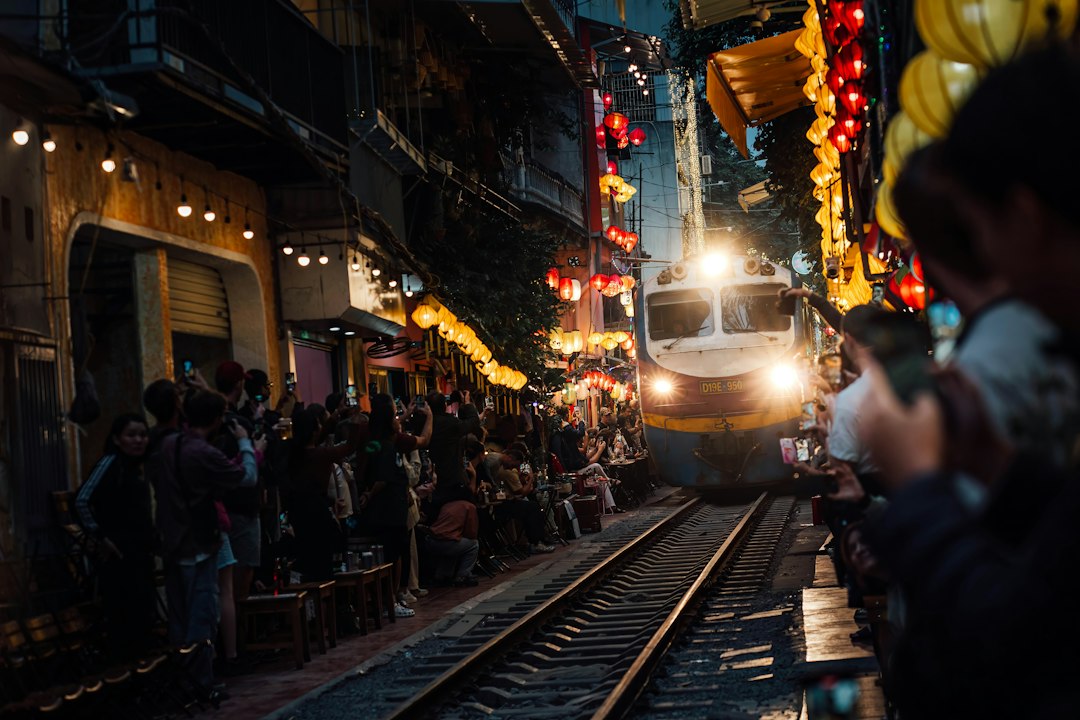
Hanoi Train Street is one of the Vietnamese capital’s most unusual urban sights: an active railway line running through a narrow residential neighborhood where homes, cafés and small businesses stand only a short distance from the tracks. When a train approaches, chairs are moved, people step back and, for a few dramatic seconds, the railway becomes the center of the street.
It is also a place where visitors need to be especially careful. Access rules have changed several times in recent years, checkpoints may be enforced, and train times are never guaranteed. This guide explains what Train Street is, where to find it, how to visit responsibly, what to photograph, what to do nearby and how to fit it into a wider stay in Hanoi.
IMPORTANT BEFORE YOU GO: OPENING HOURS & 2026 TRAIN TIMES
There is no single official “opening time” for Hanoi Train Street. It is an active railway, and access can be restricted without notice. In practice, many cafés around the popular sections operate roughly from 7:30–8:00 AM until 10:30–11:00 PM, but each café keeps its own hours and police or railway staff may temporarily close an entrance.
Old Quarter / Phùng Hưng – Monday to Friday:
6:00 AM, 6:15 AM, 7:10 PM, 7:45 PM, 8:30 PM, 9:45 PM.
Old Quarter / Phùng Hưng – Saturday and Sunday:
6:00 AM, 7:15 AM, 9:30 AM, 11:50 AM, 3:30 PM, 5:30 PM, 7:30 PM, 7:50 PM, 9:15 PM, 9:30 PM, 10:00 PM.
Southern section / Lê Duẩn – daily:
6:10 AM, 11:40 AM, 3:30 PM, 6:00 PM, 7:10 PM, 7:50 PM, 9:00 PM.
Arrive at least 30 minutes early. Trains can be around 15 minutes early or late, schedules can change, and Hanoi is reviewing rail traffic through this corridor in 2026. Always confirm the next train with a local café or railway staff on the day of your visit.
Schedule reference: Trang Nguyen’s Hanoi Train Street 2026 local guide, updated September 19, 2026.
What exactly is Hanoi Train Street?
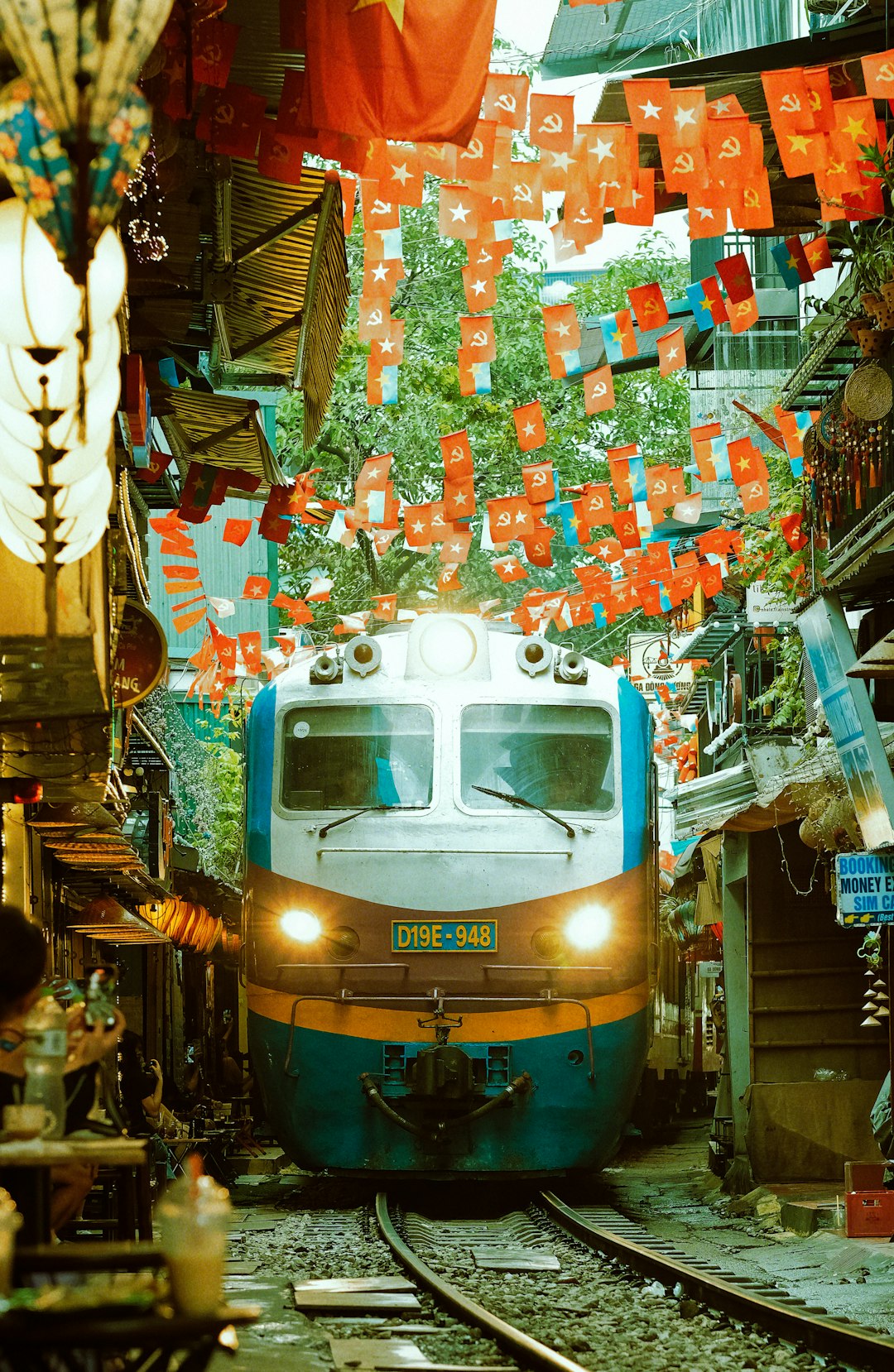
Hanoi’s railway was developed during the French colonial period and the line through the city has existed for more than a century. Over time, houses and neighborhood life grew around it. Today, the contrast is striking: laundry hangs from balconies, coffee is served beside the railway, residents cross the tracks as part of daily life, and passenger trains still pass through the middle of it all.
The scene became internationally famous through travel photography and social media, but it is important to remember that Train Street is not a theme park. It is an active railway and a real neighborhood. Visitors should treat it with the same respect they would give any residential area.
If you are planning a wider stay in the city, see our guide to things to do in Hanoi and our walk through Hanoi’s Old Quarter.
Where is Hanoi Train Street?
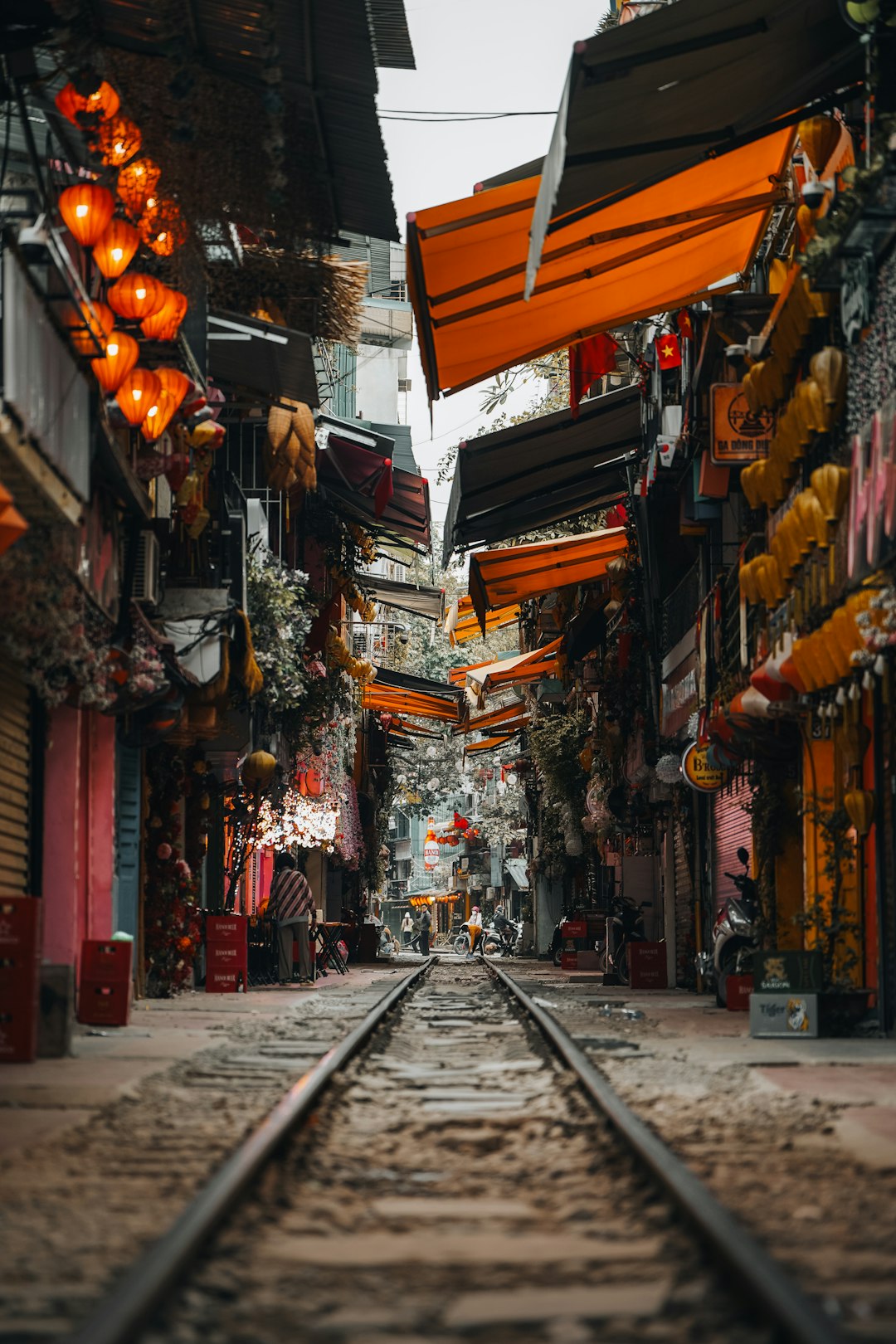
“Train Street” is not just one single point. Several sections of railway pass through dense neighborhoods in central Hanoi, and visitors usually encounter three areas:
- Tran Phu / Dien Bien Phu area: the best-known section, with the classic narrow alley, cafés and close-up views.
- Phung Hung area: farther north, close to the Old Quarter and the railway arches, with a somewhat different atmosphere.
- Le Duan area: south of Hanoi Railway Station, generally more residential and less focused on cafés.
From Hoan Kiem Lake and the Old Quarter, the better-known sections can usually be reached on foot in roughly 15–20 minutes, depending on where you start. A taxi or Grab is another easy option.
Hanoi Train Street on Google Maps
The map below shows the best-known Old Quarter / Trần Phú–Phùng Hưng section. You can zoom, move around Hanoi and open directions directly from the map.
Open Hanoi Train Street in Google Maps
JUST A FEW STEPS AWAY: TỐNG DUY TÂN FOOD STREET
Hanoi Train Street is right next to Tống Duy Tân, Hanoi’s historic culinary pedestrian street — a compact lane packed with cafés, late-night restaurants and local food stalls. It is widely known as Hanoi’s 24/7 food street and as the city’s first officially planned culinary pedestrian street. Not every business stays open all night, but several emblematic places do, including Puku and Xofa.
It is the perfect place to stop before or after watching the train: coffee, breakfast, Vietnamese dishes, late-night food and relaxed café terraces are all within a few minutes’ walk.
Hanoi Train Street train times in 2026
There is no single Train Street timetable that can be relied on every day. Passenger and freight movements can change, and trains may run early or late. Recent 2026 guides report more frequent viewing opportunities in the evening and on weekends, but the precise times differ between sources and between sections of the railway.
The safest approach is to:
- check locally on the same day;
- ask a café or accommodation provider close to Train Street;
- arrive at least 30–45 minutes before the expected train;
- never assume a train is not coming simply because the scheduled time has passed.
For railway travel elsewhere in Vietnam, consult Vietnam Railways rather than relying on social-media timetables.
What happens when a train arrives?
The atmosphere changes very quickly. Café staff pull tables and stools farther from the rails, residents move belongings back toward their homes, and visitors are instructed to stand behind a safe line or remain inside the café frontage. A few moments later, the locomotive appears and fills almost the entire width of the alley.
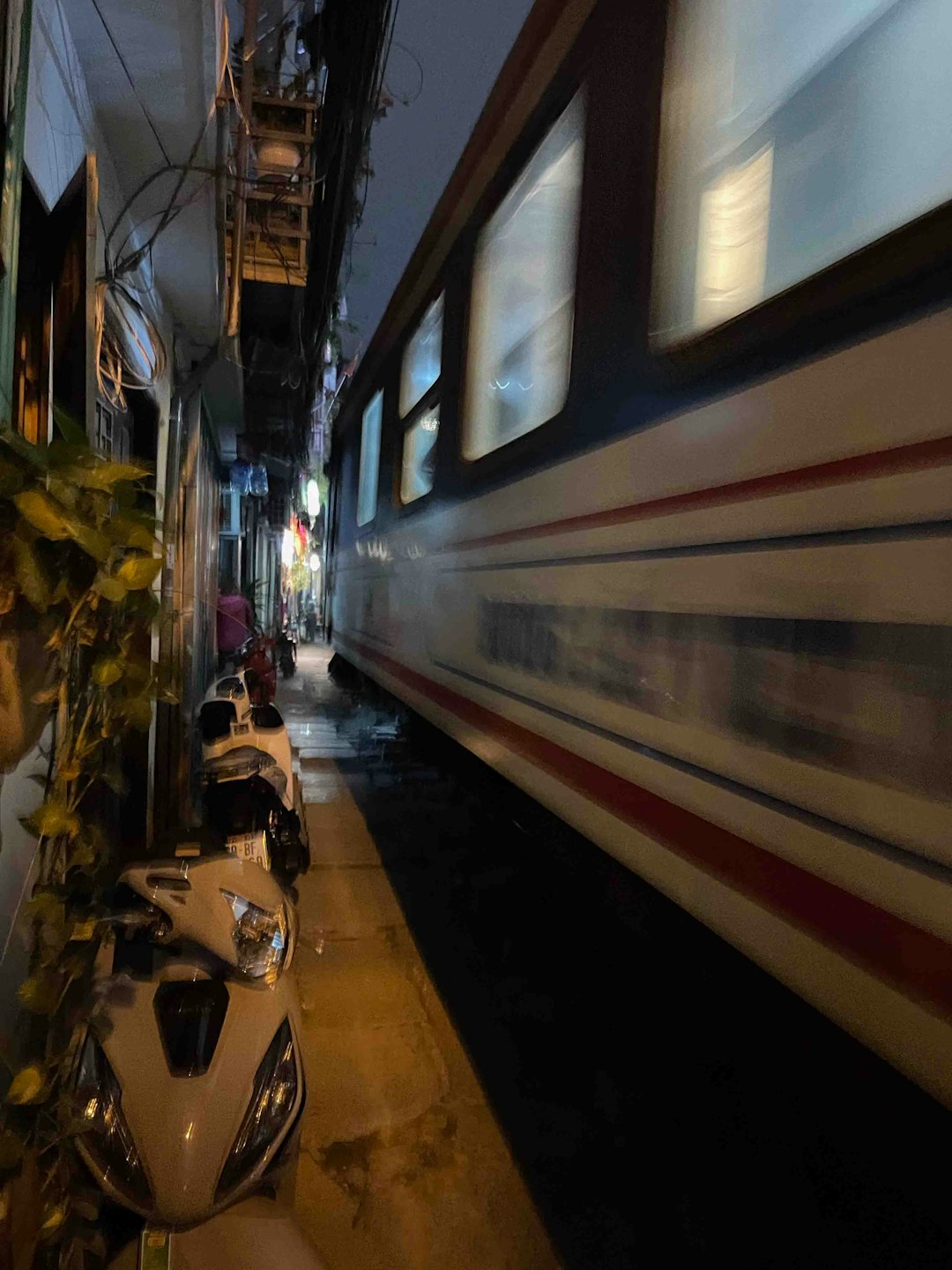
It is impressive precisely because the space is so narrow. That is also why visitors should resist the temptation to lean toward the train, hold out selfie sticks, stand in the track bed or move forward for a better photograph.
Watch Train Street in real life
This recent video from Vietnam Alive 4K gives a good sense of the evening atmosphere, cafés, crowds and multiple train passages. Remember that the conditions shown in any video may not match the access rules on the day you visit.
Best time to visit Hanoi Train Street
For photography, late afternoon can be especially attractive because the light becomes softer and warmer. Evening brings a very different mood, with café lights, lanterns and the headlights of approaching trains. Weekends can offer more train movements but usually also attract larger crowds.
If your main goal is to understand the neighborhood rather than only photograph the train, arrive well before the expected passage. You will have time to walk the surrounding streets, observe daily life and enjoy a Vietnamese coffee without rushing.
What to drink while you wait
Most cafés serve familiar Hanoi favorites such as cà phê sữa đá (iced coffee with condensed milk), black Vietnamese coffee, coconut coffee, tea, soft drinks and beer. Prices are usually higher than in ordinary neighborhood cafés because of the location.
Food lovers should also explore beyond Train Street. Hanoi is one of Asia’s great street-food cities, and our Hanoi street food guide is a good place to continue.
Photography tips
- Use a wide-angle lens to emphasize the narrowness of the street and the scale of the train.
- Photograph before the train arrives. The tracks, old façades, flags, cables and café signs are often more interesting than the train itself.
- Use burst mode for the few seconds when the locomotive passes.
- Keep your camera and body behind the safe line.
- Avoid flash toward the locomotive and never place tripods or bags on the railway.
- Ask before photographing residents at close range.
For more ideas, see our article on photographing Hanoi.
Just next door: Tống Duy Tân, Hanoi’s late-night food street
One of the best things about visiting Train Street is that you do not have to leave the area when the train has passed. Just beside the railway lies Tống Duy Tân, a short food street running between Trần Phú and Điện Biên Phủ. Hanoi sources describe it as the city’s first culinary pedestrian street, established in the early 2000s, and it remains one of the capital’s best-known places for eating late at night.
The street is only about 200 metres long, but it has an unusually dense mix of Vietnamese restaurants, street-food stalls, coffee shops and bars. At night you will find steaming bowls of noodles, fried rice, grilled dishes, chicken stewed with medicinal herbs (gà tần), sticky rice, bánh cuốn and people eating on low stools along the pavement. It is particularly lively after dark and is popular with locals, students, shift workers, taxi drivers and travelers looking for food after most of Hanoi has gone quiet.
See Tống Duy Tân Food Street on Google Maps
Puku Cafe & Sports Bar — 16–18 Tống Duy Tân
Puku is one of the best-known 24-hour addresses on the street. It combines a café, casual restaurant and sports bar, and is especially useful if you arrive very early, very late, or simply want somewhere comfortable to sit after Train Street. The menu mixes Vietnamese and international comfort food — burgers, breakfast dishes, sandwiches and local options — along with coffee, cocktails and other drinks. It is also known as a place to watch international sports, with indoor and outdoor seating.
Xofa Café & Bistro — 14 Tống Duy Tân
Immediately next door, Xofa Café & Bistro is also open 24 hours a day. It has a warmer, more relaxed café atmosphere, with sofas, bookshelves, indoor rooms and a leafy courtyard. The menu combines Vietnamese coffee with European and international café food: breakfast, croissants, eggs, burgers, pasta and full meals, as well as coconut coffee and other drinks. It is a good choice if you want to read, work on a laptop, have brunch or simply sit somewhere comfortable while waiting for the next train.
Find Xofa Café & Bistro on Google Maps
Bánh Cuốn Kỳ Đồng — 11 Tống Duy Tân
For something more traditionally Hanoian, stop at Bánh Cuốn Kỳ Đồng, a long-established local restaurant at No. 11. The specialty is bánh cuốn: delicate steamed rice rolls served with a savory dipping sauce, fried shallots and accompaniments. The restaurant is also associated with dishes such as phở xào (stir-fried pho noodles), and travel writers have described Kỳ Đồng as one of the street’s long-running family food businesses.
Find Bánh Cuốn Kỳ Đồng on Google Maps
Why combine the two? Train Street gives you one of Hanoi’s most dramatic urban sights; Tống Duy Tân gives you the food-and-café culture that surrounds it. A simple itinerary is to arrive early, have coffee or a meal on Tống Duy Tân, walk a few minutes to the railway for the train passage, then return to the food street afterwards.
What travelers and local writers say about Train Street
Part of Train Street’s fascination is how differently people describe the experience. Natalie of Purses & Planes, writing about visiting in 2026, says that seeing the street actually requires a little planning
— especially because visitors need to know the train times and where access is possible.
Nika from The Manduls describes the practical side well: planning a visit is even more confusing than it looks
. Their 2026 guide emphasizes checking access and train times rather than assuming the street is always freely open.
Hanoi local expert Trang Nguyen writes that there is no place quite like Hanoi’s Train Street
, but also recommends confirming the timetable locally because trains can run early or late.
Is Hanoi Train Street open in 2026?
The answer is not a simple yes or no. Authorities have restricted independent tourist access to parts of the railway because of safety concerns, and barriers or police checkpoints can appear at popular entrances. At the same time, some cafés continue to operate and visitors may be admitted as customers under local access arrangements.
The important point is: do not climb barriers, ignore police instructions or walk onto a restricted section of track simply to take a photo. Conditions can change from one day to the next.
For up-to-date local guidance, it is useful to compare recent information from independent Hanoi travel resources such as Hanoi Tourism Guide and VietnamGuide.net. Train schedules should always be treated as approximate.
Safety rules that matter
Train Street is memorable, but it is still an operational railway. A few simple rules make a big difference:
- follow police, railway staff and café-owner instructions immediately;
- never sit, lie down or pose on the tracks when a train may be approaching;
- keep children very close and away from the rails;
- do not extend phones, selfie sticks or cameras toward a moving train;
- do not block residents’ doorways;
- do not leave litter behind;
- do not enter any section that has been formally closed.
What to see nearby
Train Street is easy to combine with several other Hanoi highlights. You can walk east into the Old Quarter, continue toward Hoan Kiem Lake, or head north toward the historic Long Bien Bridge. If you are interested in history, our guide to Ho Chi Minh Mausoleum and our selection of museums in Hanoi can help you build a full day itinerary.
A different side of Train Street after dark
At night, the railway becomes much more cinematic. Warm lights spill from tiny cafés, red Vietnamese flags hang above the tracks and the approaching locomotive can be seen long before it reaches the narrowest section. The mood is lively, but the darkness makes it even more important to stay within designated safe areas.
Is Hanoi Train Street worth visiting?
Yes—provided you approach it as a living neighborhood and active railway rather than simply an Instagram backdrop. The attraction is not only the dramatic passage of the train. It is the extraordinary coexistence of railway infrastructure, family homes, cafés and everyday Hanoi life in an extremely confined urban space.
Allow time to explore, buy a drink from a local café if you enter through one, respect residents, check the situation on the day of your visit and put safety before the photograph. Done that way, Hanoi Train Street remains one of the capital’s most distinctive experiences.